Call Now for a Free Consultation
Call Now for a Free Consultation









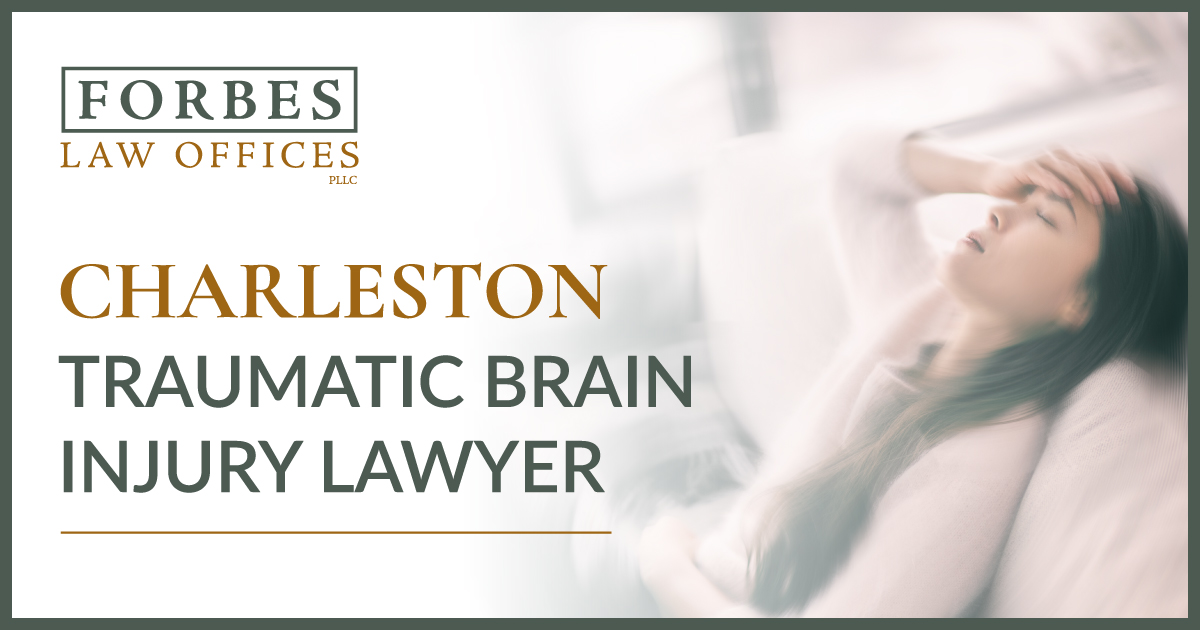
A Charleston traumatic brain injury (TBI) lawyer has to do more than prove that a head injury happened. The real challenge is showing how that injury changed the person’s ability to think, work, communicate, manage daily responsibilities, and live independently.
That’s where TBI cases become difficult.
Some brain injuries are obvious on imaging. Others aren’t. You may look physically healthy, speak clearly, and still struggle with memory, concentration, judgment, irritability, or mental fatigue. Family members often see those changes long before an insurance company does.
The financial consequences can be enormous.
Forbes Law Offices handles serious injury cases involving traumatic brain injuries and approaches these claims with litigation in mind when insurers refuse to place a fair value on your losses. A TBI settlement value in Charleston shouldn’t come from just adding up medical bills and applying a simple multiplier.
Serious brain injuries require a much bigger question: What will this injury cost you over the rest of your life?
The Centers for Disease Control and Prevention reports that traumatic brain injuries contribute to tens of thousands of deaths and hundreds of thousands of hospitalizations in the US. And those figures still don’t capture everyone treated in emergency rooms, urgent care centers, physician offices, or rehabilitation settings.
TBI claims are complicated because brain injuries can affect nearly every part of your life while remaining largely invisible to everyone else. That makes medical evidence, functional testing, and real-world testimony especially important in brain damage lawsuits in West Virginia.
A broken bone is easy to understand. An X-ray shows the fracture. Surgery repairs it. The injury is visible.
Unfortunately, brain injuries don’t always work that way.
Someone with a closed head injury may experience headaches, poor concentration, memory lapses, sleep problems, dizziness, irritability, or difficulty processing information. They may still walk into a deposition without assistance and appear perfectly normal.
Insurance companies sometimes use that appearance against you.
The argument becomes simple: if you look fine, how bad could your injury really be?
That’s not how neurological damage should be evaluated. A strong cognitive impairment legal claim may rely on several different kinds of evidence:
Timing can complicate things further.
Some symptoms show up immediately. Others become clearer only when you try to return to work, manage household responsibilities, drive, handle finances, or keep up with several tasks at once.
Post-concussion syndrome litigation often develops this way.
An insurer may point to a normal CT scan or an early emergency room discharge and argue that your injury was minor. The legal case has to explain everything that happened after your initial visit.
Maybe you’re a manager who once handled dozens of tasks and now needs constant reminders, or you’re a mechanic who now has trouble concentrating around dangerous equipment. Maybe you’re a parent who handled the family finances and starts missing payments or making repeated mistakes.
Those changes matter.
They just don’t fit neatly into a single scan.

The lifetime value of a brain injury claim comes from calculating future medical care, reduced earning ability, personal assistance, rehabilitation needs, and the loss of independence that may follow a permanent neurological injury.
Current medical bills are only the beginning.
This is where high-value TBI litigation becomes heavily financial. A person injured in their 30s or 40s may live with cognitive limitations for decades. Even relatively modest yearly expenses can turn into substantial lifetime losses when they continue for 20, 30, or 40 years. A life care planner may help estimate future medical and support needs.
A vocational expert can evaluate whether the person can return to the same job, work fewer hours, or needs an entirely different career. An economist can then translate those limitations into your long-term financial loss.
Consider someone who earned $85,000 a year before the injury and can now earn only $45,000 in a less demanding position.
The loss isn’t simply $40,000 this year. The analysis may need to account for decades of lost wages, future raises, retirement contributions, benefits, inflation, and career advancement that may never happen. That’s where closed head injury compensation can grow substantially.
Executive dysfunction damages deserve careful attention too. Executive functions govern planning, organization, judgment, impulse control, multitasking, and problem-solving.
You can retain your normal intelligence level but still lose the ability to organize your daily life independently. That can interfere with your work, money management, parenting, relationships, and basic household responsibilities.
There’s no receipt for losing your ability to read for pleasure, manage a household, or spend time with your family without becoming mentally exhausted.
That doesn’t make those losses less real.
A Charleston TBI case may involve several responsible parties rather than just the person who caused the immediate impact. Employers, contractors, property owners, manufacturers, businesses, and other defendants may all contribute to the same injury.
Finding everyone who shares fault matters because it can directly affect the money available for recovery.
A serious brain injury may result from:
Commercial truck cases, for example, could involve the driver, a trucking company, maintenance providers, cargo contractors, or parts manufacturers. A premises liability case might include property owners, tenants, a management company, or a maintenance contractor.
Product cases can add yet another layer. A defective helmet, vehicle component, safety device, industrial machine, or consumer product may place responsibility on manufacturers or distributors that weren’t even present at the accident scene.
West Virginia’s comparative fault rules make that investigation even more important.
Responsibility may be allocated among several parties, and defendants generally answer for damages based on the percentage of fault assigned to them, subject to certain exceptions.
That means leaving out a responsible party can create a serious recovery problem later.
Stopping at the most obvious defendant can leave important evidence, and potentially compensation, unexplored.
Medical experts help prove invisible brain injuries by connecting symptoms, testing, medical history, and functional limitations back to the original trauma. Their role goes far beyond repeating that a patient has headaches or memory problems.
Different specialists may address different pieces of the injury.
A neurologist can evaluate neurological symptoms. A neuropsychologist can test memory, processing speed, attention, reasoning, and executive function.
A physiatrist may focus on rehabilitation and long-term functional limitations.
Other experts may become important too.
A neurological injury lawyer may work with neurologists, neurosurgeons, speech-language pathologists, occupational therapists, vocational experts, life care planners, and economists. Neuropsychological testing can be especially useful when the injured person looks healthy but can’t perform at their previous level.
It can also help answer common defense arguments.
An insurer may claim the symptoms come from depression, aging, medication, poor sleep, prior headaches, or lack of effort instead of the accident. Medical experts can evaluate those possibilities rather than simply dismiss them.
That becomes especially important in post-concussion syndrome litigation.
A defense lawyer may emphasize normal imaging, so your experts may need to explain why normal conventional scans don’t necessarily rule out cognitive impairment or persistent neurological symptoms. The best cases connect the medical evidence with everyday life.
Testing may show slowed processing speed. A spouse may explain that you now need reminders for simple tasks. An employer may describe mistakes that never happened before the accident.
When the evidence lines up, your injury becomes much easier to understand.
A Charleston TBI lawyer builds a strong case by preserving evidence, developing the medical record, proving differences in how you functioned before your injury, and converting future losses into defensible financial numbers.
The process starts long before a settlement demand gets sent.
Forbes Law Offices handles traumatic brain injury cases as part of its Charleston personal injury practice and prepares serious claims for litigation when negotiations don’t fairly reflect the damage.
A high-stakes TBI case may move through a number of steps:
That last part can be easy to overlook. Our job in a serious TBI claim is ultimately to make an invisible injury understandable. Medical evidence tells part of the story. Financial analysis tells another. Family, employment, and functional evidence help complete the picture.
That’s how a serious valuation gets built.
A Charleston TBI case has its best chance of success when the evidence explains both your neurological injury and how it will change over time. A diagnosis alone doesn’t fully show what you’ve lost, especially when cognitive problems affect your work, independence, relationships, judgment, and future earning ability.
Our Charleston traumatic brain injury lawyers build that story piece by piece.
Forbes Law Offices approaches brain damage lawsuits in West Virginia by developing liability evidence, working with medical and financial experts, addressing comparative fault, and calculating your future losses rather than focusing only on expenses that you’ve already incurred.
That broader analysis matters.
A lot.
Closed head injury compensation should reflect more than what happened in the emergency room on the day of the accident. The real question is what your injury may continue to cost you next year, ten years from now, and possibly for the rest of your life.
Contact us today and let’s start building your case.
Call us or fill out the form below to tell us about your potential case and a
personal injury lawyer will get back to you as quickly as possible.